
Mirsal 2
Mirsal 2: Registering for Dubai's Customs Declaration System
Mirsal 2 is the electronic backbone of Dubai Customs: every declaration, from a single parcel to a fleet of containers, files through it. Registering your business on it (or knowing exactly what your broker does there in your name) is basic trade hygiene.
- Mirsal 2 access set up under your own code
- Declaration types matched to your flows
- In-house filing enabled where volumes justify it
- Broker oversight when you outsource
Dubai-based support for customs codes, renewals and trade compliance.

Quick Answer
Mirsal 2 is Dubai Customs' declaration platform, accessed through the Dubai Trade portal. Businesses with a customs client code register for Mirsal access to file import, export, transit and free zone declarations electronically, directly in-house or through a licensed broker filing under their code. Declarations clear in minutes when data, documents and duty payments align.
What Mirsal 2 Handles
Every commercial movement through Dubai's ports, airports and free zones maps to a Mirsal declaration type: imports for local consumption, exports, transit, temporary admission, free zone transfers and more. The system validates data, assesses duty, processes payment and issues clearance, mostly without human touch when the data is right.
- Import declarations with duty assessment and payment
- Export and re-export declarations
- Free zone in/out and inter-zone transfers
- Transit and temporary admission regimes

Registering and Filing In-House
Companies with steady volumes often bring filing in-house: register on Dubai Trade, obtain Mirsal access against your client code, train a declarant, and file directly. The economics beat per-declaration broker fees at moderate volume: provided someone owns data quality, because errors file under your name either way.
- 1Customs client code active on Dubai Trade
- 2Mirsal 2 user access requested for your entity
- 3Declarant trained on your declaration types
- 4Standing data (HS codes, values, origins) templated
- 5Duty payment channel (e-payment/CDR) configured

Broker vs In-House: The Honest Trade-Off
Brokers earn their fees on complexity: unusual regimes, exemption claims, inspection handling. Routine repeat flows (same goods, same lanes) are commodity filings a trained coordinator does cheaper in-house. Many businesses run hybrid: in-house for the routine, broker for the exceptions. Either way, the declarations carry your code and your liability, oversight is not optional.
- High-volume routine flows: in-house usually wins
- Complex regimes and exemptions: brokers add value
- Hybrid models are common and sensible
- Liability follows your code regardless of who files

What Mirsal 2 Actually Is
Mirsal 2 is Dubai Customs' electronic declaration system: the platform through which import, export and transit declarations are filed and duties assessed. Your customs client code is what gives you access to it. Understanding that Mirsal 2 is the operational layer, and the client code the key to it, clarifies why the two are set up together: the code registers you, and Mirsal 2 is where the actual customs work happens for every shipment.
- Dubai Customs' electronic declaration system
- Where import, export and transit declarations are filed
- Accessed through your customs client code
- The operational layer for every shipment
Filing Declarations In-House
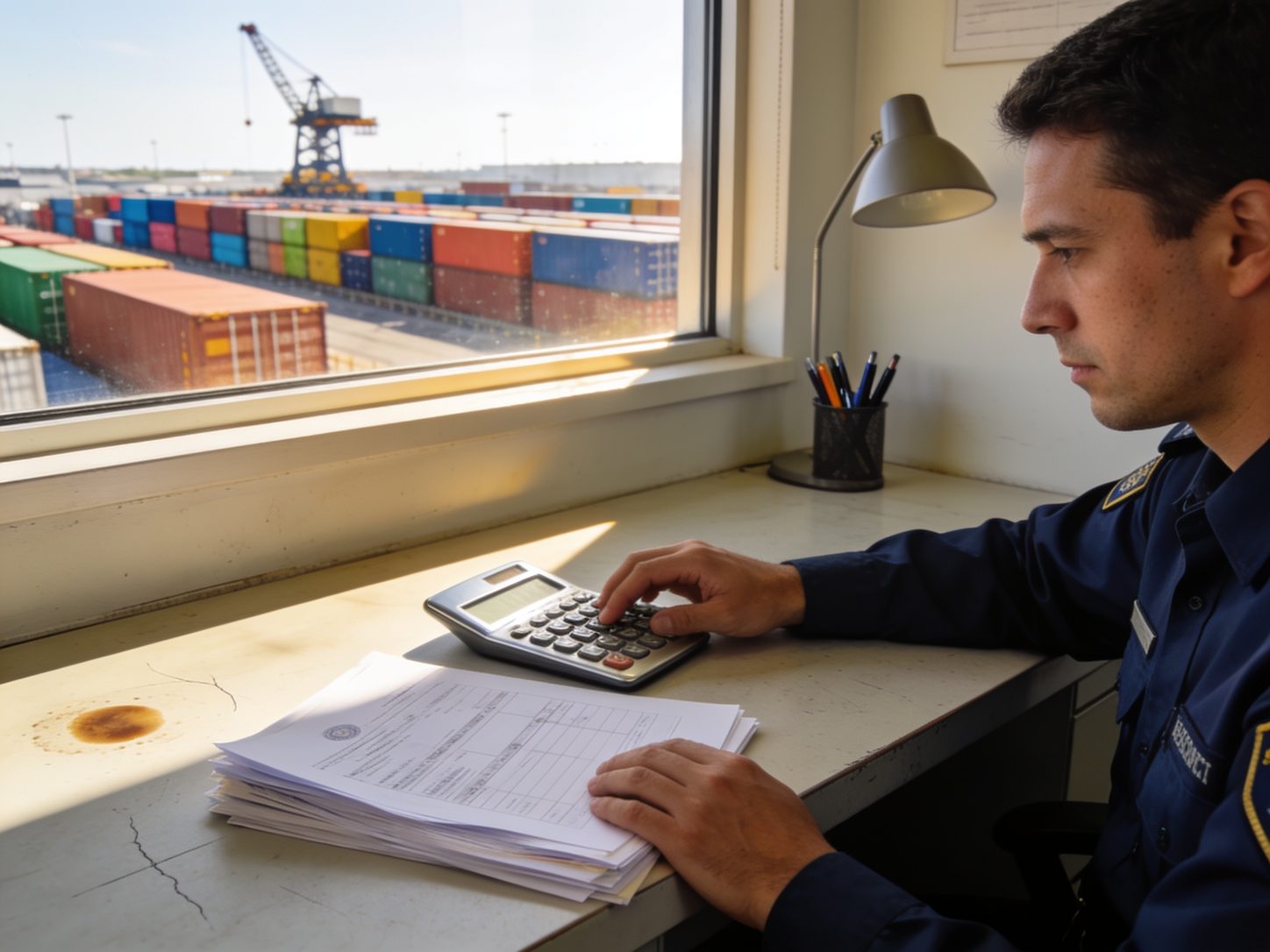
A business with the code can file its own Mirsal 2 declarations, which suits companies with steady, straightforward trade and staff who know the classifications. Doing it in-house means control over timing and cost per declaration, but it also means responsibility for correct tariff codes, valuation and documentation, errors in which lead to penalties or held goods. It fits businesses willing to build the customs competence, not those who trade only occasionally.
- The code lets you file declarations yourself
- Control over timing and cost per declaration
- Responsibility for codes, valuation and documents
- Suits steady trade with in-house competence

Broker or In-House?
The alternative is a customs broker who files on your behalf. A broker brings classification expertise and absorbs the procedural complexity, which suits businesses with varied or regulated goods or occasional shipments; the trade-off is a fee per declaration and less direct control. The honest choice is about volume and complexity: high-volume, standard trade often justifies in-house capability, while varied or infrequent trade is usually better served by a broker.
- Brokers bring classification expertise
- They absorb procedural complexity
- In-house gives control at a lower per-unit cost
- Choose by volume and goods complexity

Related Exiloz Services & Guides





What is Mirsal 2?
Dubai Customs' electronic declaration system: the platform through which all import, export, transit and free zone declarations are filed and cleared.
How do I register for Mirsal 2?
Through the Dubai Trade portal, against an active customs client code: with user access, declarant details and payment channels configured.
Can I file customs declarations without a broker?
Yes, businesses with Mirsal access file directly. Many do for routine flows and keep a broker for complex cases.
How fast do declarations clear?
Clean declarations with correct data and paid duty typically clear in minutes; inspections and data mismatches are what add days.
Who is liable for a broker's filing errors?
Declarations under your code are your responsibility to customs: broker agreements allocate recovery between you, but the compliance record is yours.
What is Mirsal 2?
Dubai Customs' electronic system for filing import, export and transit declarations and assessing duties. Your customs client code gives you access to it for every shipment.
Do I need a broker to use Mirsal 2?
No: a business with a customs code can file its own declarations, though it is then responsible for correct tariff codes, valuation and documentation. Brokers handle it for a fee.
Should I file customs declarations myself or use a broker?
Steady, standard, high-volume trade often justifies in-house filing for control and cost; varied, regulated or occasional trade is usually better served by a broker's expertise.
How do I get access to Mirsal 2?
Through your customs client code obtained via Dubai Trade, the code registers you and gives you access to the Mirsal 2 declaration system.
What is Mirsal 2 used for?
It is Dubai Customs' electronic system for filing import, export and transit declarations and assessing duties, accessed through your customs client code for every shipment.
Can I file Mirsal 2 declarations myself?
Yes, with a customs code you can, though you are then responsible for correct tariff classification, valuation and documentation. Many businesses use a broker for varied or regulated goods.
Do I need Mirsal 2 access and a customs code separately?
The customs client code is what grants Mirsal 2 access: they are set up together, the code registering you and Mirsal 2 being where declarations are filed.
The rest of what we do
Licence, visas, bank account, books and the first tax return — handled by the same team, so the structure has to survive its first year.
-
 UAE Free Zones
All 37 zones compared by emirate, with the founding law and what each is really for.
Explore
UAE Free Zones
All 37 zones compared by emirate, with the founding law and what each is really for.
Explore
-
 Company Formation
Mainland, free zone and offshore incorporation, started from your activity code.
Explore
Company Formation
Mainland, free zone and offshore incorporation, started from your activity code.
Explore
-
 Mainland vs Free Zone
Pick the jurisdiction before the licence. The decision that survives year one.
Explore
Mainland vs Free Zone
Pick the jurisdiction before the licence. The decision that survives year one.
Explore
-
 PRO & Document Clearing
Establishment card, immigration file, visas, medicals and attestation.
Explore
PRO & Document Clearing
Establishment card, immigration file, visas, medicals and attestation.
Explore
-
 VAT Registration
Threshold checks, grouping and registration handled against the FTA's current rules.
Explore
VAT Registration
Threshold checks, grouping and registration handled against the FTA's current rules.
Explore
-
 VAT Return Filing
VAT201 prepared, reconciled and filed, with the position documented.
Explore
VAT Return Filing
VAT201 prepared, reconciled and filed, with the position documented.
Explore
-
 Corporate Tax Registration
Every taxable person must register, including free zone companies applying 0%.
Explore
Corporate Tax Registration
Every taxable person must register, including free zone companies applying 0%.
Explore
-
 Corporate Tax Filing
Returns, elections and the qualifying income analysis behind them.
Explore
Corporate Tax Filing
Returns, elections and the qualifying income analysis behind them.
Explore
Filing Blind Through a Broker?
Whether you bring declarations in-house or keep the broker honest, we will set up Mirsal access, templates and oversight so every filing under your code is one you would sign.
