
JAFZA
JAFZA: The Port Zone Built for Physical Trade
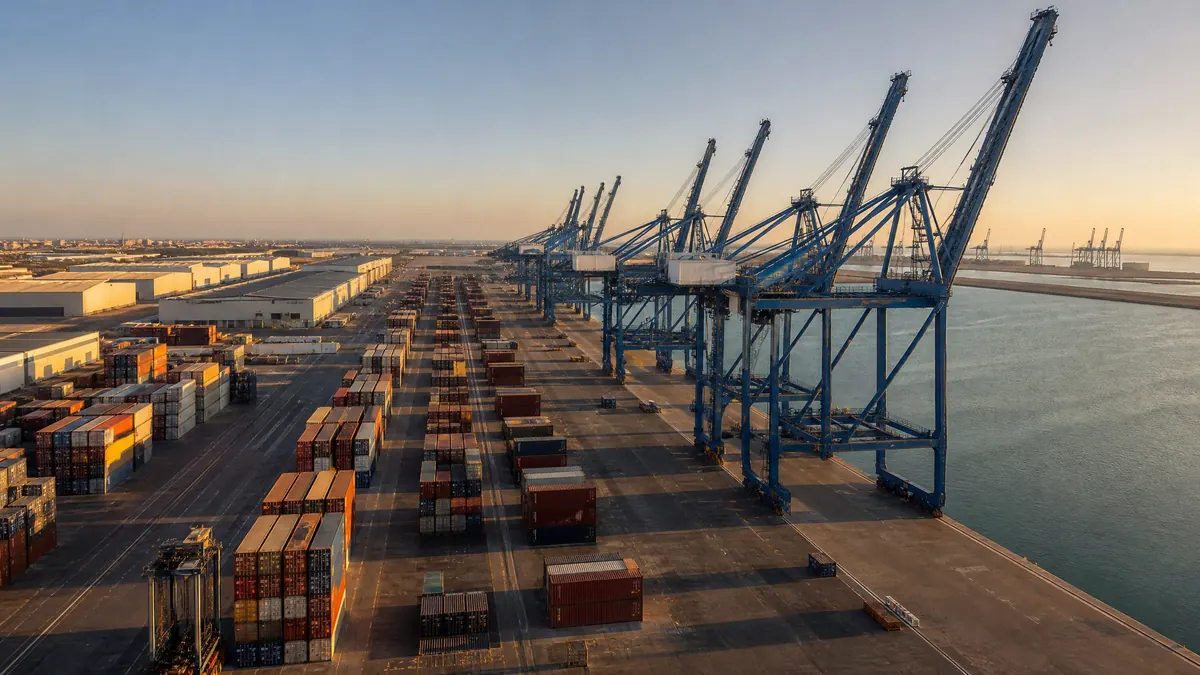
Jebel Ali Free Zone was established in 1980, making it the oldest of the zones on this list, and it remains the one to beat for anything involving containers, warehousing and re-export. It is DP World's flagship free zone and describes itself as the largest customs bonded zone in the Middle East.
- Licence category matched to trading, industrial or logistics activity
- Customs registration and client code handled alongside the licence
- Designated zone VAT treatment assessed against your goods flow
- Warehouse and land requirements scoped before you apply
A licensed Dubai tax practice, not a licence broker.
Quick Answer
JAFZA (Jebel Ali Free Zone) was established in 1980 and is DP World's flagship free zone, describing itself as the largest customs bonded zone in the Middle East. It issues Trading, Service, Industrial and Logistics licences, and supports Free Zone Establishment (FZE), Free Zone Company (FZCo), Public Listed Company, Branch and Offshore structures. Facilities run from co-working space through offices, showrooms and warehouses to development land.
Four Licence Categories, and Picking the Right One
JAFZA issues Trading, Service, Industrial and Logistics licences. The distinction is not cosmetic; it governs what you may physically do with goods on site, what approvals you need and what facility you can take.
A business that stores and re-exports is not the same as one that assembles or processes. Get the category wrong and the amendment costs more than the original application.
- Trading: buying, storing and selling goods
- Service: professional and support services within the zone
- Industrial: manufacturing, assembly and processing
- Logistics: freight, distribution and supply chain operations

Entity Types Available
JAFZA supports a wider set of structures than most zones: Free Zone Establishment, Free Zone Company, Public Listed Company, branches of both local and foreign companies, and an offshore vehicle.
The offshore company is the one most often misunderstood. It is a holding structure, not a trading licence, and it does not come with the operating rights or the facility that an FZE does.
- Free Zone Establishment (FZE): single shareholder
- Free Zone Company (FZCo): multiple shareholders
- Public Listed Company
- Branch of a local or a foreign company
- Offshore company: a holding vehicle, not an operating licence

Customs, Bonded Status and VAT on Goods
This is where JAFZA earns its position. Bonded status changes how goods move and when duty becomes payable, and for a re-export business that is the whole economics of the operation.
VAT is a separate question from customs, and the two get conflated constantly. Designated zone treatment under the VAT law applies to supplies of goods, and only where the zone meets the criteria in Article 51(1) of the Executive Regulations: a fenced area, customs controls, internal procedures for handling goods, and an operator complying with FTA procedures.
Services supplied inside a designated zone are treated like services anywhere else in the UAE. That single sentence corrects most of what is written about free zone VAT.
- Customs client code needed before you can import or export
- Bonded movement defers duty: model it into your pricing
- Designated zone VAT treatment covers goods, not services
- The FTA's criteria are in Article 51(1) of the Executive Regulations
- Designated zone status comes from a Cabinet Decision, not marketing

The 0% Question, Answered Honestly
No free zone grants you 0% corporate tax. The zone issues a licence; the Federal Tax Authority decides your rate. To pay 0% you have to be a Qualifying Free Zone Person, and that status is tested every year against your actual income, not your address.
Revenue billed to mainland UAE customers is generally not qualifying income. It carries 9%.
We file the corporate tax returns for companies in these zones, which is why we would rather have this conversation before you pay a licence fee than at your first return.
- Qualifying income, tested against your real invoices
- Adequate substance maintained inside the zone
- Transfer pricing compliance, including with related parties
- Audited financial statements: not optional for a QFZP
- Election and registration handled on time, every year

What We See Go Wrong in Jebel Ali
JAFZA setups fail on physical reality more often than on paperwork. The licence is fine; the operation does not fit the space.
The most expensive version is the facility mismatch. A company takes a warehouse sized for year one, wins a contract, and discovers that moving to a larger unit inside the zone is a lease negotiation and a licence amendment rather than a phone call.
Then there is the customs code. Companies routinely reach their first shipment before anyone mentions that a customs client code is a separate registration from the trade licence. The container waits.
The third is the assumption that bonded status and VAT treatment are the same thing. They are not. Customs duty and VAT are different regimes with different triggers, and a business can be bonded for one while fully within scope for the other.
- Facility sized for today, not for the contract you are chasing
- Customs client code discovered at the first shipment, not before
- Bonded status confused with designated zone VAT treatment
- Licence category too narrow for what the business actually does

Related Exiloz Services & Guides





When was JAFZA established?
1980, per the Ministry of Economy & Tourism registrar record, which makes it the oldest major free zone in the UAE. It operates as DP World's flagship free zone.
What licence types does JAFZA issue?
Four: Trading, Service, Industrial and Logistics. The category determines what you may physically do with goods on site and which facilities you can take, so it is worth settling before application rather than amending later.
Is JAFZA a designated zone for VAT purposes?
Designated zone status is conferred by Cabinet Decision and the current list is published by the Federal Tax Authority under its Legislation section. The criteria in Article 51(1) of the Executive Regulations require a fenced area, customs controls, internal goods-handling procedures and operator compliance with FTA procedures. Because status can change and applies only to the extent the criteria are met, we verify the current position against your specific facility.
What is the difference between a JAFZA FZE and a JAFZA offshore company?
An FZE is an operating licence with a facility, visa capacity and the right to trade from the zone. The offshore company is a holding vehicle: it carries no UAE residence visas, no local trading rights and no physical premises requirement. Using one for an operating business is a common and expensive mistake.
Do I need a customs code for a JAFZA company?
If you import or export goods, yes. The customs client code is separate from the trade licence and is needed before shipments can clear. We handle it alongside the licence so the first shipment is not the moment you discover it is missing.
What facilities can a JAFZA company take?
JAFZA's range runs from co-working space and offices through showrooms and retail outlets to warehouses, land plots and customised development. That breadth is the point: it is one of the few UAE zones where a business can start in an office and grow into industrial land without changing authority.
Can a JAFZA company sell into the UAE mainland?
Not directly as a general rule. Goods entering the mainland from the free zone are an import, with the customs and VAT consequences that follow, and selling to mainland customers usually needs a distributor, a mainland branch or a dual arrangement. For a trading business this is the single most important thing to model before choosing the zone.
How long does JAFZA company formation take?
The licence is usually not the constraint. Where JAFZA setups take time is the facility: warehouse and land allocation is a leasing process with its own timeline: plus any external approvals your activity requires, the customs registration, and the corporate bank account. A straightforward office-based licence moves quickly; an industrial operation should plan in months, not days.
The rest of what we do
Licence, visas, bank account, books and the first tax return — handled by the same team, so the structure has to survive its first year.
-
 UAE Free Zones
All 37 zones compared by emirate, with the founding law and what each is really for.
Explore
UAE Free Zones
All 37 zones compared by emirate, with the founding law and what each is really for.
Explore
-
 Company Formation
Mainland, free zone and offshore incorporation, started from your activity code.
Explore
Company Formation
Mainland, free zone and offshore incorporation, started from your activity code.
Explore
-
 Mainland vs Free Zone
Pick the jurisdiction before the licence. The decision that survives year one.
Explore
Mainland vs Free Zone
Pick the jurisdiction before the licence. The decision that survives year one.
Explore
-
 PRO & Document Clearing
Establishment card, immigration file, visas, medicals and attestation.
Explore
PRO & Document Clearing
Establishment card, immigration file, visas, medicals and attestation.
Explore
-
 VAT Registration
Threshold checks, grouping and registration handled against the FTA's current rules.
Explore
VAT Registration
Threshold checks, grouping and registration handled against the FTA's current rules.
Explore
-
 VAT Return Filing
VAT201 prepared, reconciled and filed, with the position documented.
Explore
VAT Return Filing
VAT201 prepared, reconciled and filed, with the position documented.
Explore
-
 Corporate Tax Registration
Every taxable person must register, including free zone companies applying 0%.
Explore
Corporate Tax Registration
Every taxable person must register, including free zone companies applying 0%.
Explore
-
 Corporate Tax Filing
Returns, elections and the qualifying income analysis behind them.
Explore
Corporate Tax Filing
Returns, elections and the qualifying income analysis behind them.
Explore
Moving Goods Through Jebel Ali?
We will scope the licence category, the facility and the customs registration together, and check how your goods flow is treated for VAT.
