
DAFZA
DAFZA: Airport-Side Trade, and the DIEZ Change Most Pages Miss
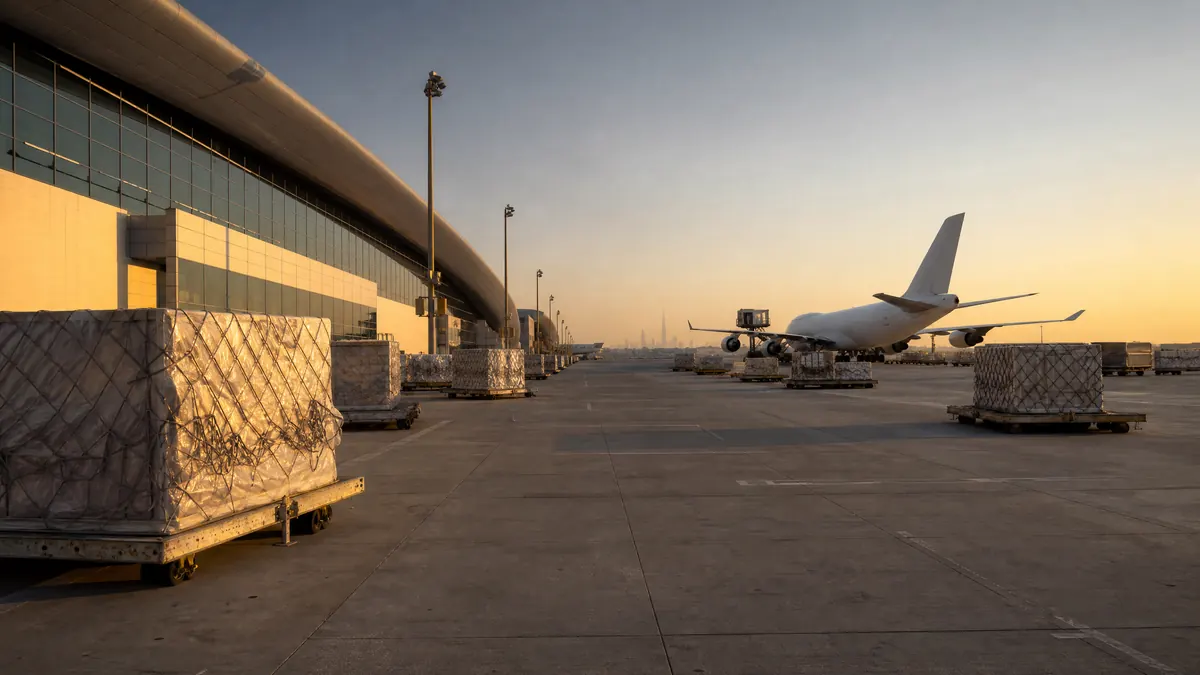
Dubai Airport Free Zone was established under Law No. 2 of 1996 establishing the Free Trade Zone in Dubai International Airport. Its pitch has always been proximity: cargo on and off aircraft with minimal ground movement. What changed more recently is who runs it.
- Entity type chosen from DAFZA's three available forms
- Air cargo and re-export flows mapped before the licence
- Customs registration handled alongside company formation
- Corporate tax position assessed against your actual customers
A licensed Dubai tax practice, not a licence broker.
Quick Answer
DAFZA (Dubai Airport Free Zone) was established under Law No. 2 of 1996 and sits beside Dubai International Airport. It now operates as a member of the Dubai Integrated Economic Zones Authority (DIEZ), created in 2021, alongside Dubai Silicon Oasis and Dubai CommerCity. DAFZA offers three entity types: Free Zone Company (FZCO), Public Listed Company (PLC) and Branch Office. It serves more than 20 sectors, with facilities including offices, light industrial units, retail space and business centres.
DAFZA Is Now Part of DIEZ
In 2021 the Dubai Integrated Economic Zones Authority was created, consolidating three zones under one authority: DAFZA, Dubai Silicon Oasis, and Dubai CommerCity. DAFZA now describes itself as a member of DIEZ.
Plenty of comparison articles still describe DAFZA as a standalone authority. It is a small detail that tells you how old the rest of the page is.
Practically, it means the three zones share products and services, and a choice between them is a choice of location and specialism rather than of regulator.
- DIEZ created in 2021, consolidating three Dubai zones
- DAFZA: established 1996, airport-linked global trade
- Dubai Silicon Oasis: established 2003, technology park
- Dubai CommerCity: launched April 2021, digital commerce

Three Entity Types
DAFZA keeps the structure list short: two companies and a branch. The Free Zone Company and the Public Listed Company are incorporated entities; the Branch Office extends a company that already exists elsewhere.
For most incoming businesses the real choice is between an FZCO and a branch, and it turns on whether you want a separate balance sheet or an extension of the parent.
- Free Zone Company (FZCO): incorporated, separate legal entity
- Public Listed Company (PLC)
- Branch Office: an extension of an existing company
- Branch route avoids new share capital but shares parent liability

Who Uses the Airport Zone
Businesses where the cargo is high value relative to its weight, and where hours matter: pharmaceuticals, electronics, aviation parts, perishables, luxury goods, e-commerce fulfilment.
Facilities run from offices and business centres through light industrial units and parks to retail space, plus the Halal Trade & Marketing Centre.
If your goods move by sea in containers, the port zones make more sense. Match the zone to the freight, not to the brochure.
The test we apply is simple enough to run yourself. Work out what one day of delay costs your shipment, then compare it against the premium you pay for airport-side space. For pharmaceuticals and aviation parts the answer is obvious and the premium is cheap. For furniture, building materials or anything sold by volume, the same calculation points firmly at Jebel Ali, and no amount of proximity to a runway changes it.
- High-value, time-sensitive air cargo
- Offices, light industrial units and parks, retail space
- DAFZ Square Business Centre and Regus by DAFZ
- Halal Trade & Marketing Centre
- Sea freight in volume usually points to JAFZA instead

The 0% Question, Answered Honestly
No free zone grants you 0% corporate tax. The zone issues a licence; the Federal Tax Authority decides your rate. To pay 0% you have to be a Qualifying Free Zone Person, and that status is tested every year against your actual income, not your address.
Revenue billed to mainland UAE customers is generally not qualifying income. It carries 9%.
We file the corporate tax returns for companies in these zones, which is why we would rather have this conversation before you pay a licence fee than at your first return.
- Qualifying income, tested against your real invoices
- Adequate substance maintained inside the zone
- Transfer pricing compliance, including with related parties
- Audited financial statements: not optional for a QFZP
- Election and registration handled on time, every year

The Practical Traps at DAFZA
Two things catch DAFZA companies, and both come from the zone's greatest strength being location rather than space.
Space is the first. Airport-adjacent land is finite and priced accordingly. A business that grows into needing bulk storage often finds the economics stop working, and the honest answer is that the volume should have gone to a port zone in the first place. We would rather say that before the first renewal.
The second is stale advice. Because DAFZA joined DIEZ in 2021, a meaningful amount of what is written about it online describes an arrangement that no longer exists. If a comparison table is confident about DAFZA's standalone structure, treat the rest of its numbers with the same suspicion.
Check the source's date before you trust its figures.
- Airport-adjacent space is finite: model growth before committing
- High-volume bulk storage usually belongs in a port zone
- Much published DAFZA guidance predates the 2021 DIEZ consolidation
- Branch versus FZCO changes your liability and reporting position

Related Exiloz Services & Guides




What law established DAFZA?
Law No. 2 of 1996 establishing the Free Trade Zone in Dubai International Airport, per the Ministry of Economy & Tourism registrar record for the authority.
Is DAFZA still an independent authority?
It now operates as a member of the Dubai Integrated Economic Zones Authority (DIEZ), which was created in 2021 to consolidate DAFZA, Dubai Silicon Oasis and Dubai CommerCity. Comparison articles that still describe DAFZA as fully standalone are working from pre-2021 information.
What entity types does DAFZA offer?
Three: Free Zone Company (FZCO), Public Listed Company (PLC) and Branch Office. In DAFZA's own description, two are companies and the third is a branch of an existing entity.
Is DAFZA better than JAFZA?
They solve different problems. DAFZA is built around air cargo, where speed and high value-to-weight matter. JAFZA is built around sea freight, containers, bonded warehousing and industrial land. The right answer follows your freight profile, not a ranking.
Does a DAFZA licence mean 0% corporate tax?
No. Free zone location does not determine the rate. You must meet the Qualifying Free Zone Person conditions: qualifying income, adequate substance, transfer pricing compliance and audited financial statements, and income billed to mainland customers is generally taxed at 9%.
What facilities does DAFZA offer?
Offices, light industrial units and parks, retail space, the DAFZ Square Business Centre, Regus by DAFZ, a Government Centre and the Halal Trade & Marketing Centre. The estate is built for high-value, time-sensitive goods rather than bulk volume, which is the practical difference from the port zones.
What sectors does DAFZA serve?
DAFZA states it serves more than 20 sectors. In practice the zone concentrates businesses where speed and value-to-weight matter most: pharmaceuticals, electronics, aviation parts, perishables, luxury goods and e-commerce fulfilment are the recurring profiles.
Should I choose a DAFZA branch or an FZCO?
A Free Zone Company is a separate incorporated entity with its own balance sheet and limited liability. A Branch Office extends a company that already exists, avoiding new share capital but keeping the parent on the hook. If you already operate elsewhere and want the UAE activity ring-fenced, the FZCO usually makes more sense; if you want continuity with the parent's track record for banking and contracts, the branch can help.
The rest of what we do
Licence, visas, bank account, books and the first tax return — handled by the same team, so the structure has to survive its first year.
-
 Mainland vs Free Zone
Pick the jurisdiction before the licence. The decision that survives year one.
Explore
Mainland vs Free Zone
Pick the jurisdiction before the licence. The decision that survives year one.
Explore
-
 PRO & Document Clearing
Establishment card, immigration file, visas, medicals and attestation.
Explore
PRO & Document Clearing
Establishment card, immigration file, visas, medicals and attestation.
Explore
-
 VAT Registration
Threshold checks, grouping and registration handled against the FTA's current rules.
Explore
VAT Registration
Threshold checks, grouping and registration handled against the FTA's current rules.
Explore
-
 VAT Return Filing
VAT201 prepared, reconciled and filed, with the position documented.
Explore
VAT Return Filing
VAT201 prepared, reconciled and filed, with the position documented.
Explore
-
 Corporate Tax Registration
Every taxable person must register, including free zone companies applying 0%.
Explore
Corporate Tax Registration
Every taxable person must register, including free zone companies applying 0%.
Explore
-
 Corporate Tax Filing
Returns, elections and the qualifying income analysis behind them.
Explore
Corporate Tax Filing
Returns, elections and the qualifying income analysis behind them.
Explore
-
 Accounting & Bookkeeping
Books kept audit-ready from month one, not reconstructed at year end.
Explore
Accounting & Bookkeeping
Books kept audit-ready from month one, not reconstructed at year end.
Explore
-
 Audit Preparation
Schedules, reconciliations and the evidence your auditor will ask for.
Explore
Audit Preparation
Schedules, reconciliations and the evidence your auditor will ask for.
Explore
Trading Through Dubai Airport?
We will match the entity type and facility to your cargo profile, handle the customs registration, and check the tax position before you commit.
